
 Back to Westfjords Activities
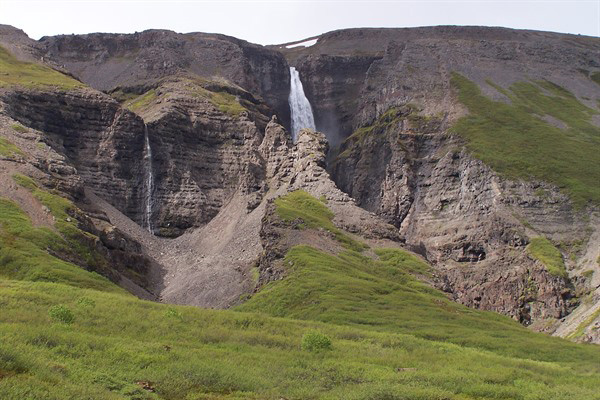
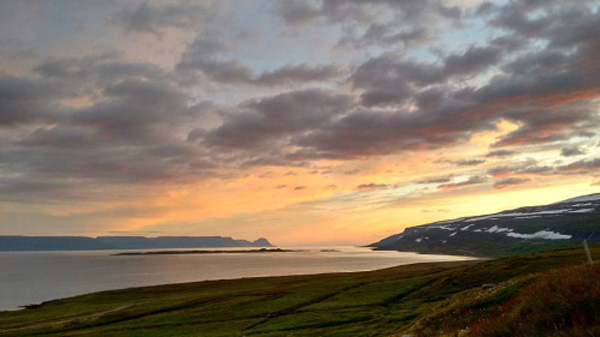
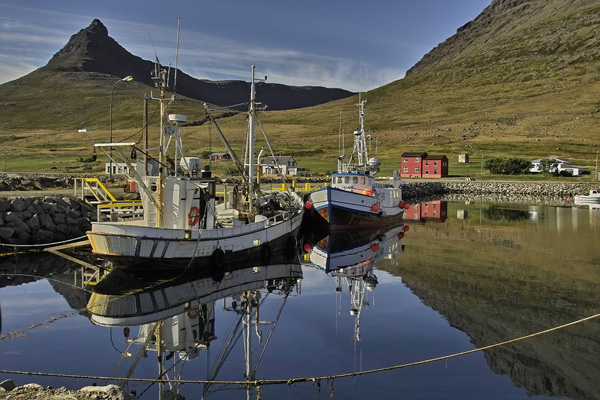
The largest and most breathtaking of all the West Fjords, the 75 kilometres long Ísafjarðardjúp stretches all the way from the mountains around Bolungarvík at its mouth to the shores of Ísafjörður fjord, the most easterly of the nine smaller fjords that make up the southern coastline. Each of the nine is a true fjord in its own right, with plenty to see and explore. From the gentle slopes of Ísafjörður fjord furthest inland at the south-east of Ísafjarðardjúp, each fjord has progressively steeper and taller mountains, until you reach Skutulsfjörður in the north-west. Approaching from the south-east, the views of Ísafjarðardjúp are spectacular; remote, uninhabited, forbidding fjord lands as far as the eye can see. If you look across the waters of the bay you’ll see the sheer snowcapped mountains of Langadalsströnd and Snæfjallaströnd, themselves divided by the glacial lagoon Kaldalón.
Until just a couple of decades ago these coasts were dotted with isolated farms making an uncertain living from sheep farming and the odd crop; today, most have been deserted, reminders of how difficult life is up here. In addition to working the land, many farmers also eked out an existence as fishermen on Ísafjarðardjúp, where whitefish was once abundant. Nowadays, the bay is better known for the rich shrimping grounds found at its mouth, as the whitefish have moved further out to sea.
Amongst all the natural wonders of the area such as Hvítanes seal colony, Reykjanes geothermal area and the historical location Litlibær you will find a small community of 190 people, most based in the phoenix village of Súðavík. Somewhere in between is Mjóifjörður. It’s the one few cars venture down these days, due to the big green road bridge across its mouth. As a result, it’s great for hiking – especially as there are hot springs at Hörgshlíð and Heydalur.
My visit
Iceland
The cornerstone of Icelandic culture is the Icelandic language, which has spawned a literary tradition that dates back to the ancient Icelandic Sagas. These are tales of violent blood feuds, traditions, family, and character.
ID: 700910-0750 VSK Nr: 106233
MY VISIT ICELAND IS
OPERATED BY FERÐAVEFIR

